
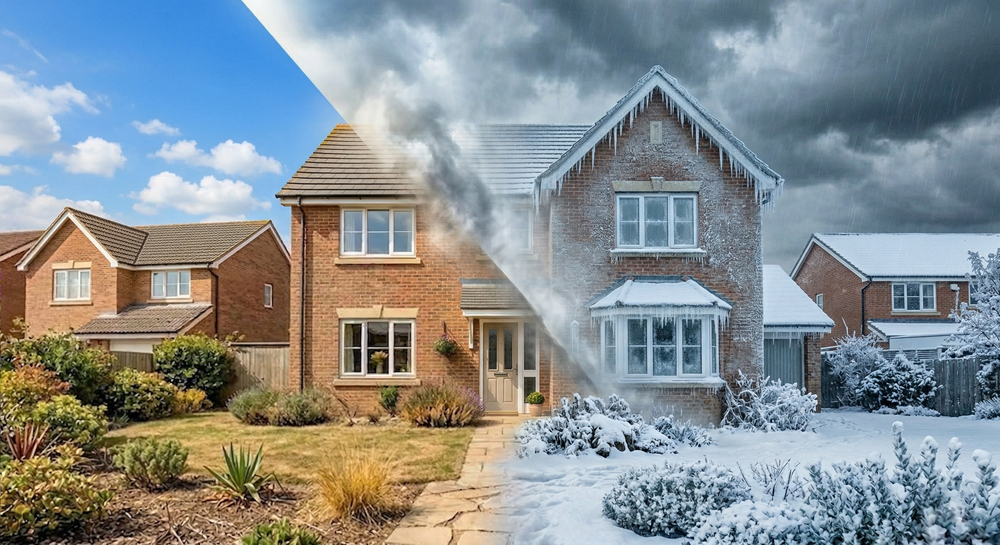
In recent years, the UK has experienced temperatures exceeding 40 degrees, followed by periods of cold snaps and prolonged low temperatures. This level of variability is no longer unusual – it’s becoming the baseline.
These spikes and drops are becoming increasingly unpredictable, and our housing stock is not equipped to respond.
For the past decade, the industry has focused heavily on energy efficiency. Airtightness has improved, insulation standards have increased and heat loss has reduced. These are all necessary steps forward, but they are based on a fundamental assumption that external conditions remain relatively stable.
That assumption no longer holds.
An energy-efficient building that cannot prevent overheating in summer, or maintain healthy indoor air quality in winter, cannot be considered high-performing. In many cases, we are now seeing buildings that meet efficiency targets on paper, yet fail to deliver comfortable, stable environments for occupants.
The challenge has shifted. It is no longer enough to design for efficiency alone – we must also design for adaptability.
This requires a more integrated approach to building performance. Airtightness remains critical, but it must be paired with controlled, mechanical ventilation to ensure consistent air exchange without compromising thermal performance. Systems must be capable of managing both heat recovery during colder periods and mitigating excess heat during warmer conditions.
This is where integrated solutions such as those developed by Nilan become essential. By combining mechanical ventilation with heat recovery and heat pump technology, a single system can actively regulate indoor climate conditions throughout the year.
Rather than treating heating, cooling and ventilation as separate elements, they must be addressed as part of a unified system. Only then can buildings respond effectively to external fluctuations.
The direction of travel is clear. The industry must move beyond a narrow focus on energy efficiency and towards a broader definition of performance – one that prioritises resilience, stability and indoor environmental quality under a wide range of conditions.
The question is no longer how little energy a building can use under ideal circumstances. It is how well it performs when conditions are far from ideal.
That is the standard modern housing must now meet.
If you would like to discuss how we can support your projects, contact: sales@nilan.uk.com